
The GPU Problem – AI Infrastructure Risk
Most business leaders don’t understand how AI really works – and that creates a structural business risk.
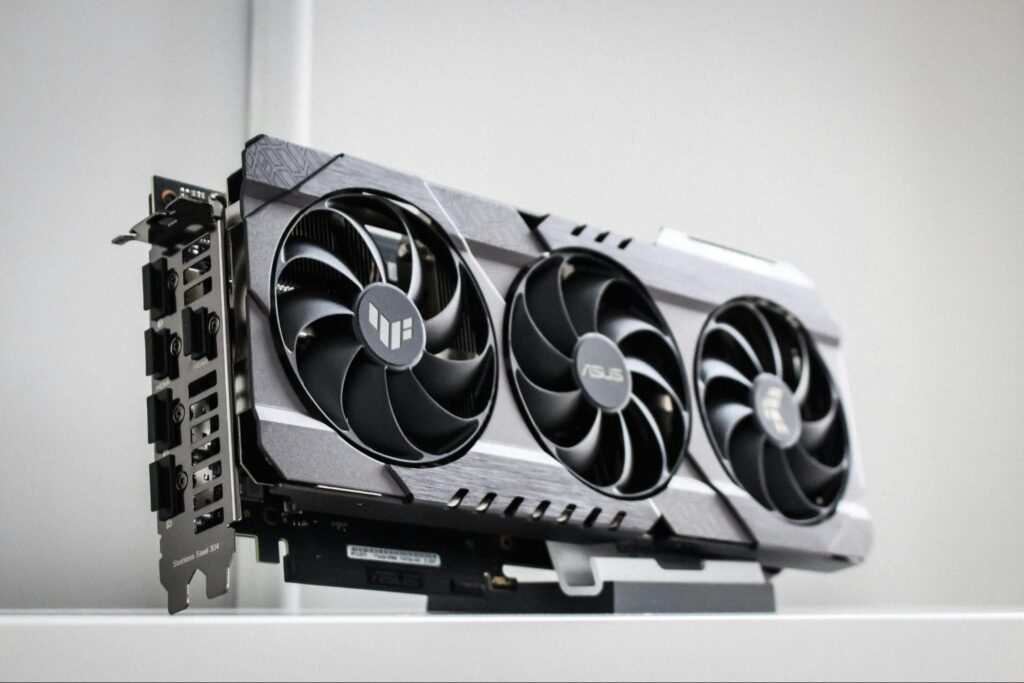
Artificial Intelligence is not just code running in the cloud. Behind every “intelligent” insight is an infrastructure of specialized chips, immense power demands, cooling systems, and physical constraints that traditional enterprise leadership rarely considers. This gap between perception and reality isn’t academic – it’s a strategic, financial, and operational risk that companies must confront now.
In this blog, we’ll unpack:
- Why today’s ignorance around AI infrastructure matters
- How compute demand is outpacing supply
- Why this creates pricing volatility and continuity risk
- What business leaders must understand and act on
This isn’t fear-mongering – it’s a call to informed action.
The Problem: Leaders Don’t Know How AI Actually Works
Ask most executives what powers generative AI and you’ll get an answer rooted in abstracts – “models,” “data,” or “algorithms.” Rarely will the conversation shift to the physical hardware that actually performs tens of billions of operations per second: Graphics Processing Units (GPUs), power delivery, cooling, and physical data centers.
A helpful analogy: imagine every AI query as turning on an everyday hairdryer. That single hairdryer uses a noticeable amount of electricity, which is tolerated in a home. But when a business begins scaling AI usage, that one hairdryer suddenly becomes tens of thousands of them running continuously.
In an AI transformation, compute demand can surge by orders of magnitude – even a “Month 1” transformation might see GPU or compute consumption increase by 10,000% or more compared to baseline workloads. This isn’t hypothetical: AI workloads genuinely scale with usage and model complexity, and every major competitor is engaging in similar transformations.
Millions of consumer interactions, tens of thousands of internal workflows, and countless automated processes rapidly transform what was once a minimal compute load into a continuous high-intensity demand. The hairdryer metaphor stops being cute and starts being a real infrastructure load.
Demand vs. Supply: A Structural Crisis
This surge in computing isn’t isolated. Across the industry, organizations are competing for the same limited hardware resources.
The global market for AI chips – including GPUs and specialized processing units – is growing rapidly. According to market analysts, the AI chip market is projected to reach $372 billion by 2032, growing at nearly 30% annually. Yet supply chain experts warn that demand is outpacing supply in ways that may cause shortages similar to – and in some ways more structural than – the pandemic chip crunch of 2020–2023.
Today’s GPU shortage is not driven by speculative miners or temporary events. It’s driven by legitimate enterprise AI needs for:
- Training large models
- Real-time inference infrastructure
- Continuous AI workloads
This demand surge puts huge stress on supply chains for GPUs themselves and the high-bandwidth memory chips they rely on. Global memory shortages are contributing to price escalations of 200–400% for key components, and companies like OpenAI are consuming significant portions of the global DRAM supply.
Large cloud providers, too, are constrained. There are documented waiting lists for premium GPU instances, and major buyers are securing inventory months in advance as pricing power shifts towards sellers. This isn’t a short-term blip – it’s structural, with demand expected to keep accelerating through the decade.
Compute Is Revenue-Bound: The Cost of AI Is Tied to Hardware
One of the most underappreciated realities of AI economics is that revenue growth for AI providers is closely tied to access to compute resources.
OpenAI itself reported around $12 billion in revenue in 2025, up sharply from previous years, but much of that growth is directly linked to compute-intensive services like ChatGPT and enterprise APIs. The company – and competitors like Meta, Google, and others – must continually secure more GPU capacity to support training and inference at scale. If hardware supply lags behind demand, revenue growth is constrained by compute availability.
This is a structural boundary on business growth: you can have the best model or idea, but if you can’t get the compute to run at scale, you can’t deliver. That’s a fundamental shift from typical SaaS or software businesses, where scaling compute cost is secondary to product adoption.

Price Volatility: A New Cost Risk for Businesses
Price volatility in AI infrastructure is rampant.
GPUs are expensive to begin with – a top-tier Nvidia AI GPU like the H100 may start around $25,000 per unit, with costs rising significantly in tight markets. Some configurations and vendor mark-ups can push these figures even higher.
This volatility extends to cloud compute pricing as well. Spot instance pricing fluctuates dramatically, often driven by supply constraints and competitive bidding among enterprises. In such an environment, CFOs can no longer project AI budgets based on last quarter’s pricing – because infrastructure costs can vary by 10x to 100x over time.
This level of uncertainty makes traditional business planning – CAPEX vs. OPEX, cost per unit of output, total cost of ownership – extremely challenging. Leaders need to understand the variability of compute pricing and incorporate contingency plans in budgeting and pricing models.
Business Continuity Nightmare: Building on “Alien” Infrastructure
For most companies, AI workloads run on cloud infrastructure owned by third parties – Amazon Web Services, Microsoft Azure, Google Cloud, or specialized AI hosts.
Here’s the catch: your business continuity depends on infrastructure you don’t control and often don’t fully understand. Outages, regional constraints, pricing changes, supply exhaustion, or even sudden shifts in vendor strategy can impact your ability to deliver.
You’re building critical business capabilities on an “alien” substrate – technology stacks and physical infrastructure you did not build, do not fully own, and may not fully understand.
Even the electrical and energy implications are significant. Data centers consume a growing share of global electricity – roughly 1.5% of global power in 2024 – with projections that this could rise dramatically as AI workloads proliferate. Losing access to power, cooling capacity, or connectivity isn’t a theoretical risk – it’s a tangible infrastructure failure scenario that leaders must consider in continuity planning.
If a major cloud provider experiences an outage or throttles resources due to capacity crunches, your AI-dependent systems could be compromised overnight.
Yet Not Adopting AI = Business Risk Too
Ironically, while adopting AI carries infrastructure risks, not adopting AI is itself an existential business risk.
Across industries, competitors are embedding AI into product development, customer engagement, supply chain automation, and strategic decision-making. Firms that fail to adapt risk being outcompeted, becoming operationally inefficient, and losing market relevance.
The result? Leaders are trapped between two risks:
- Failing to adopt AI → losing competitiveness
- Adopting AI blindly → infrastructure dependency risk
The smart approach isn’t avoidance – it’s understanding and managing these risks.

What Leaders Must Do: From Limited Awareness to Informed Decision-Making
Business leaders don’t have to become data center engineers – but they do need a fundamental understanding of compute risk. Here’s a practical framework.
1. Understand Your Compute Requirements
Ask:
- How much compute do your AI applications actually need?
- How is that trending over time?
- Are you tracking usage in GPU-hours, peak demand periods, and latency bottlenecks?
Capacity planning isn’t optional – misestimating needs can lead to emergency procurements or wasted budget. In 2023, Meta reportedly underestimated GPU needs by 400%, resulting in emergency purchases at premium prices.
2. Know Where Your Compute Lives
Different providers, regions, and service tiers have different availability, pricing, and outage characteristics. Intellectual property, compliance needs, and data residency all factor into where compute resources should live.
Ask:
- What happens if Provider A has a regional outage?
- Can you shift to Provider B?
- How dependent are you on specific hardware types?
3. Explore On-Prem and Hybrid Options
Not every company should build its own GPU farm – but every company should evaluate the option.
On-premises GPUs, while involving upfront cost, provide:
- Direct control over capacity
- Predictability of pricing
- Reduced dependency on external quotas
However, on-prem comes with its own costs: power delivery, cooling systems, maintenance, hardware lifecycle, and specialized IT staffing.
4. Fully Understand All Costs
Beyond hardware:
- Power costs – data centers are massive electrical loads.
- Cooling – advanced GPUs require liquid cooling or other sophisticated solutions.
- Staffing – IT and DevOps expertise is essential.
- Lifecycle – GPUs have a limited economic life before obsolescence.
There is no free lunch – only informed trade-offs.
5. Don’t Be a Product of Circumstance
Whether you stay on cloud, go on-prem, or choose a hybrid model, make deliberate decisions based on risk, cost, and continuity profiles.
Even choosing cloud isn’t a passive choice – it’s a calculated one.
Conclusion: AI Infrastructure Risk Is a Strategic Reality
AI has moved beyond novelty. It’s embedded in products, operations, and growth strategies across industries. Yet most leaders still treat it like abstract software – ignoring the physical and economic infrastructure that powers it.
You’re caught between two risks:
- Not adopting AI → losing competitive relevance
- Adopting AI without infrastructure insight → operational fragility
The answer isn’t to panic. It’s to understand the landscape, measure the costs, and make informed decisions about the compute that now underpins your business.
AI isn’t just software anymore – it’s infrastructure, economics, and strategic risk combined. The leaders who understand that will shape the future, not be surprised by it.