
The Rise of the Private AI Brain: Why Enterprises Need Secure, On-Premise Intelligence for Internal Workflows
For years, enterprise AI has been marketed as a collection of tools: chatbots, dashboards, copilots, analytics widgets. Each promises incremental efficiency gains, yet most organizations still struggle with the same foundational problems – fragmented knowledge, slow decision-making, weak governance, and limited visibility into how work actually gets done.
The next evolution of enterprise AI is not another tool.
It is the emergence of the private AI brain – a secure, on-premise intelligence system that understands a company’s entire internal ecosystem and enables leaders to interact with their business conversationally, in real time.
This shift marks a fundamental rethinking of how AI should operate inside organizations: not as an external service trained on public data, but as a trusted internal intelligence layer built entirely on a company’s own knowledge.
Why Traditional Enterprise AI Falls Short
Most AI deployments fail to deliver lasting value because they address symptoms rather than systems.
Enterprises typically face:
- Data scattered across finance, HR, engineering, project management, and documentation tools
- Siloed reporting that answers narrow questions but misses cross-functional insight
- Manual analysis that consumes time and introduces bias
- Security concerns that limit how AI can be used with sensitive data
In response, organizations bolt AI features onto existing tools – a chatbot here, an analytics model there – without creating a unified understanding of the business as a whole. The result is AI that can generate outputs, but not intelligence.
From Tools to an Internal Intelligence System
A private AI brain takes a different approach.
Instead of operating on partial datasets or external knowledge, it ingests the company’s complete internal knowledge base – including financial data, HR records, business processes, engineering documentation, and project management systems – and synthesizes it into a single, conversational intelligence layer.
This allows leaders to ask natural questions such as:
- What are teams actually working on right now?
- Are we following our defined processes?
- Where are time and money being lost?
- Which projects or teams show early signs of risk?
Rather than requiring analysts to manually pull reports or stitch together dashboards, the AI system answers these questions instantly – grounded entirely in the organization’s own data.
This is not a search. It is enterprise understanding.
Why “Private” and “On-Premise” Matter
As AI capabilities grow more powerful, so do concerns around data privacy, regulatory compliance, and intellectual property leakage.
Public or cloud-hosted AI systems often require:
- Sending proprietary data to third-party servers
- Accepting opaque model behavior
- Trusting vendors with sensitive operational knowledge
For many organizations – especially those in regulated industries or with valuable IP – this is a non-starter.
A private AI brain is deployed on-premise or within a private virtual cloud, ensuring:
- Data never leaves the customer’s environment
- No external access to proprietary information
- Full control over security, governance, and compliance
This architecture fundamentally changes the risk profile of AI adoption. Instead of introducing new exposure, AI becomes a controlled internal asset – governed like any other critical system.
Conversational Intelligence for the Entire Business
One of the defining characteristics of a private AI brain is how people interact with it.
Rather than navigating dashboards or learning complex query languages, users engage through a chat-based, conversational interface – similar to consumer AI experiences, but trained entirely on internal data.
This democratizes access to insight:
- Executives gain real-time visibility without waiting on reports
- Managers can validate assumptions instantly
- Teams can understand how their work connects to outcomes
More importantly, the system doesn’t just retrieve information – it connects context across departments, enabling questions that traditional reporting tools cannot answer.

Operational Intelligence, Not Just Answers
The real value of an internal AI brain lies in its ability to generate actionable operational insight.
By continuously analyzing structured and unstructured data, the system can:
- Identify inefficiencies and bottlenecks
- Highlight deviations from defined processes
- Surface early indicators of delivery, security, or compliance risk
- Reveal where effort is misaligned with business value
In engineering and delivery environments, this can extend to:
- Tracking actual work against commitments
- Verifying adherence to definitions of done and documentation standards
- Ensuring that effort aligns with outcomes rather than activity
AI stops being a passive reporting layer and becomes an active intelligence system that supports better decisions at every level.
Built for Governance, Not Afterthoughts
Enterprise AI cannot succeed without trust.
A private AI brain is designed with governance and explainability at its core:
- Every insight is traceable to internal data
- Outputs are auditable and reviewable
- Access is controlled by role and policy
- Human oversight remains central
This enables organizations to use AI confidently – not just for experimentation, but for decisions that affect people, money, and risk.
Why Managed, Partner-Led Delivery Matters
An intelligence system of this scope is not a “plug-and-play” product.
Successful deployment requires:
- Deep integration with existing systems
- Ongoing tuning and optimization
- Alignment with business workflows
- Continuous governance and monitoring
That’s why private AI brains are increasingly delivered as managed services through trusted partners. In this model:
- The core AI technology provides the intelligence foundation
- Partners handle deployment, customization, and ongoing management
- Customers receive a fully operational system without needing in-house AI expertise
This B2B2B approach reduces adoption friction, accelerates time to value, and ensures the system evolves alongside the business.
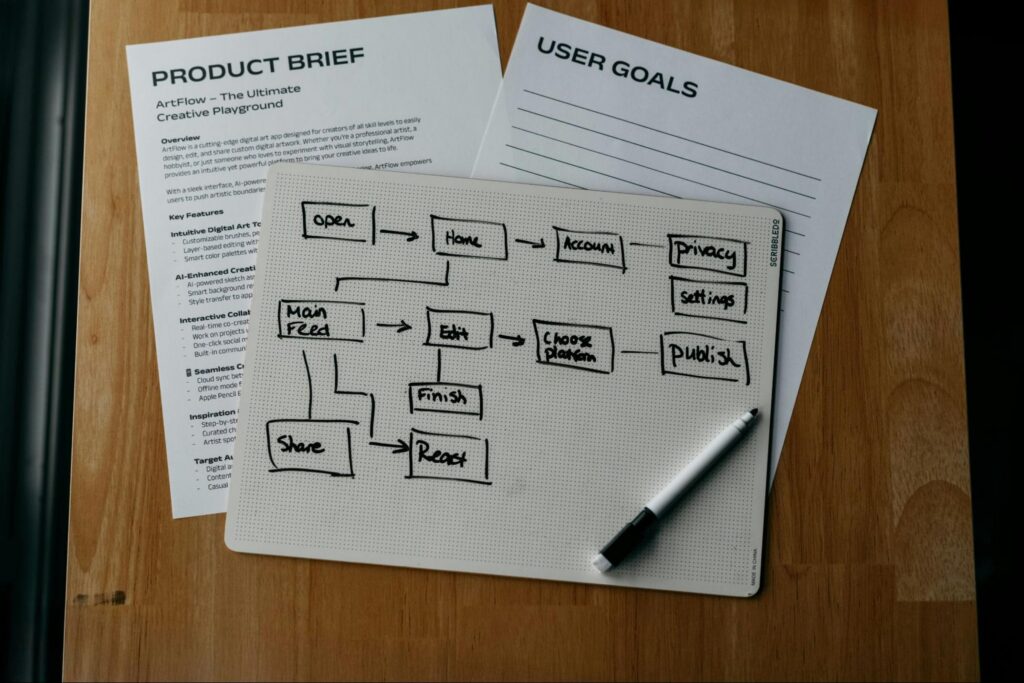
The Business Impact of an Internal AI Brain
When implemented correctly, a private AI brain delivers tangible enterprise value:
- Time savings by eliminating manual data gathering and reporting
- Cost reduction through early identification of inefficiencies and rework
- Improved security by keeping all data on-premises
- Higher quality outcomes through process adherence and visibility
- Stronger decision-making via real-time, cross-functional insight
Most importantly, it creates a foundation for future AI innovation – without compromising privacy, control, or trust.
Conclusion: The Future of Enterprise AI Is Internal
The future of enterprise AI is not another feature or productivity add-on.
As enterprises move beyond experimentation, the winners will be those who treat AI not as a tool, but as a core internal capability – governed, trusted, and deeply embedded in how work actually happens.
The private AI brain is not just a new product category. It is the next logical step in how intelligent organizations operate.